
Africa's AI Information Brokers: A New Dawn for a Continent
A Report for MR Consulting By a Seasoned Technology Analyst Date: 2026-01-28
Part 1: The Human Face of a Digital Revolution
After four decades of covering technology, you learn to look past the hype. You look for the human story. In a small village in Malawi, a farmer named Grace is worried. Her maize crop, the lifeblood of her family's income, is showing strange spots on its leaves. A few years ago, this would have meant a long, expensive trip to the nearest town to find an agricultural officer, a journey she could ill afford. Today, she walks to the home of a young man named Samuel.
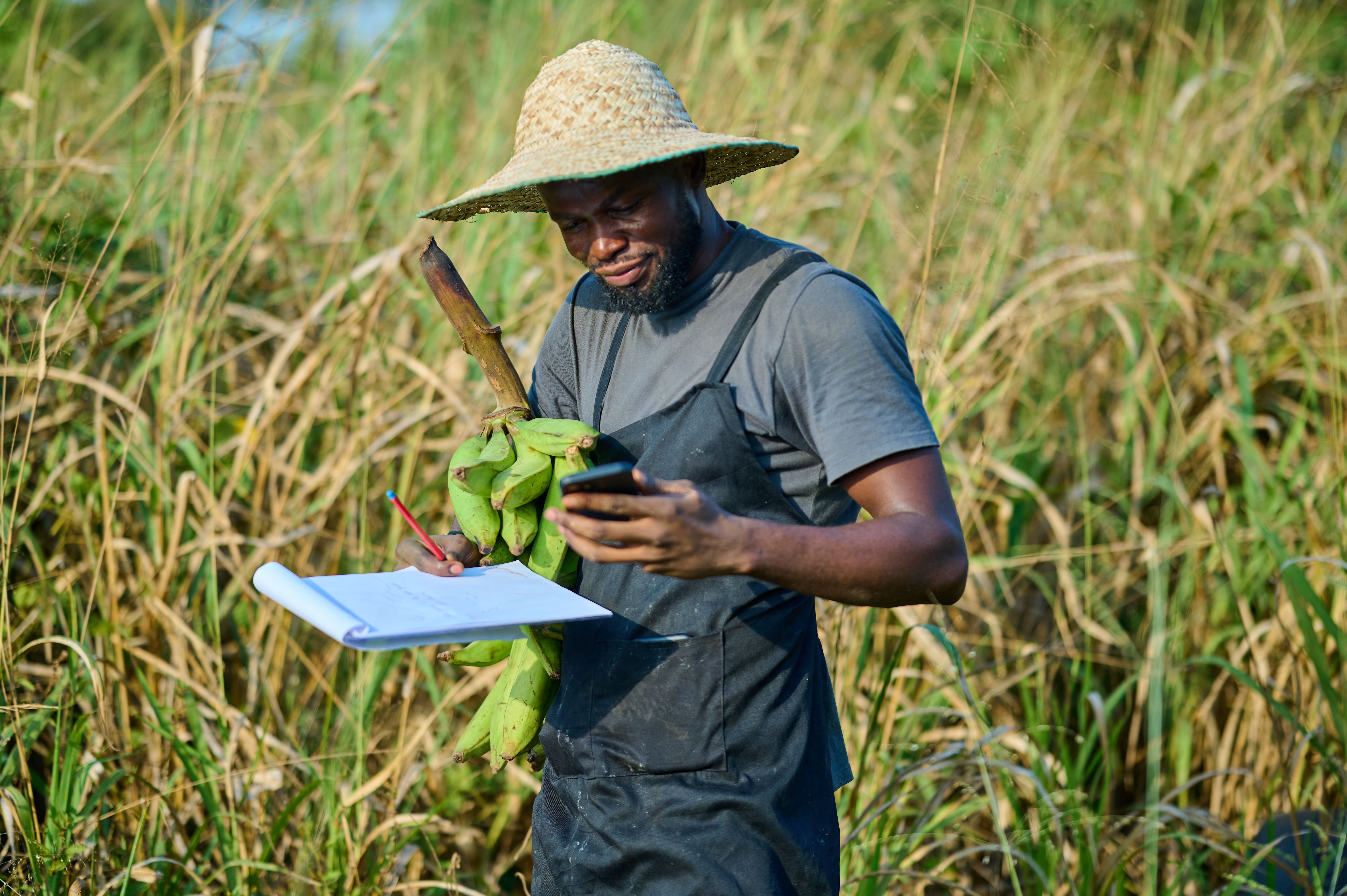
Samuel is not a trained agronomist. He is what we are starting to call an AI information broker. With his smartphone, he takes a picture of Grace's afflicted leaf and uploads it to an app. Within seconds, an artificial intelligence system identifies the issue as a specific fungal blight. But it does more than that. It provides a set of simple, actionable steps Grace can take, using locally available remedies. It even sends this advice to her basic feature phone as a voice note in her native language, Chichewa [18, 23]. Samuel charges a small fee for this service, less than a tenth of what the trip to town would have cost. Grace saves her crop, and Samuel earns a living.
Half a continent away, in a bustling market in Lagos, Nigeria, a small business owner named Aisha needs a loan to expand her stall. The banks have always turned her down. She has no formal credit history. She turns to a local fintech agent, another kind of AI broker. This agent helps her apply for a microloan through an app on his phone. The app’s AI does not look for a bank account. Instead, it analyzes years of Aisha’s mobile money transactions and phone usage patterns to assess her creditworthiness [18, 23]. Within minutes, the loan is approved and disbursed to her mobile wallet.
These are not futuristic fantasies. They are snapshots of a profound change happening across Africa right now. This is the story of the AI information broker, a new kind of entrepreneur who is using artificial intelligence not as a toy, but as a tool to solve some of the continent's most persistent challenges. It is a story of human ingenuity meeting technological power, and it deserves our full attention.

Part 2: What Exactly Is an AI Information Broker?
Let's be clear about what we are discussing. The term "AI information broker" might sound technical, but the concept is deeply human. In simple terms, an AI information broker is a person who uses artificial intelligence tools to provide valuable information or services to their community, often for a fee. They are the human interface for complex digital systems.
In the global tech world, these systems are often called AI agents. An AI agent is a piece of software that can perceive its environment, process information, make its own decisions, and take actions to achieve a goal without a person constantly guiding it [20]. But in the African context, this definition takes on a practical, grounded meaning. We are not talking about abstract robots. We are talking about pragmatic tools designed to fill very real gaps in services like healthcare, finance, and agriculture, where a lack of skilled professionals has long been a barrier to progress [20].
What makes these AI brokers uniquely African are two key characteristics.
Deep Localization
First, they are deeply localized. Africa is a continent of over 2,000 languages [1]. For technology to be truly inclusive, it must speak the language of the people. Innovators are building AI systems that can understand and communicate in Yoruba, Hausa, Swahili, and many other local tongues [1]. This is essential for reaching rural communities and the vast informal economy that traditional digital services have often ignored. This is a huge challenge, of course. The continent is considered "data-scarce," with a tiny fraction of internet content available in African languages, making it hard to train these AI models [11, 24]. But the ambition is there, and it is vital.
Contextual Adaptation
Second, they are adapted to the local context. This means they are built to work in the real world, with all its limitations. Many of these AI tools are designed to function in low-bandwidth environments or even offline [1]. They are often lightweight applications that can run on the kind of lower-end smartphones that are common across the continent, a concept some call "Small AI" [23]. This is a world away from the massive, power-hungry AI models that require constant, high-speed internet connections in other parts of the globe.
The ultimate purpose of these brokers is not to replace people, but to augment them. They make existing professionals more effective and empower new entrepreneurs like Samuel and the agent who helped Aisha. They are about extending the reach of timely, accessible, and inclusive services to millions of people who have been left out for far too long [20].
Part 3: A Crucible of Innovation: Why Now? Why Africa?
The rise of the AI broker in Africa is no accident. It is the result of a powerful convergence of demographic, technological, and social forces. The continent has become a crucible for a specific kind of problem-driven innovation, where technology is embraced not for its novelty, but for its raw utility in solving urgent, real-world challenges [4, 23].
The Mobile-First Reality
The first and most important catalyst is Africa's mobile-first landscape. Many African nations skipped the age of landlines and desktop computers, jumping straight into the era of the mobile phone [4, 33]. This has created a massive, digitally native foundation for AI to build upon. In a country like Kenya, smartphone penetration has hit 92% [23]. The mobile phone is the primary, and often only, gateway to the digital world. It is the bank, the classroom, and the marketplace. This makes it the natural platform for deploying the kind of lightweight, mobile-friendly AI applications that brokers use.
The Youth Dividend
This technological foundation is supercharged by Africa's demographic dividend. With a median age of just 19, Africa has the youngest population on the planet. Around 60% of its people are under the age of 25 [4, 33]. This creates an enormous pool of tech-savvy early adopters and a future workforce that is eager to engage with digital tools [4, 12, 16]. There is a tangible sense of optimism among young Africans about AI's power to transform their lives and create new jobs [11]. This demographic energy, combined with a vibrant entrepreneurial spirit, means the continent is not just adopting AI, but is actively shaping its development and demanding a say in its governance [4, 16].
Grassroots, Needs-Based Adoption
Finally, the way AI is being adopted is different. In many Western countries, AI adoption is often a top-down, corporate affair focused on optimizing existing business processes. In Africa, it is frequently a grassroots movement [23]. Individuals, small businesses, and startups are grabbing AI tools to solve their immediate problems. We see this in Kenya, where an incredible 42.1% of internet users were using ChatGPT by mid-2025, a rate far higher than in many other nations [23]. This practical, needs-based approach ensures that AI development is grounded in local realities. It fosters solutions that are relevant, impactful, and built for the communities they are meant to serve [4, 23].

Part 4: The Upside: A Cascade of Benefits
The emergence of AI information brokers is creating a powerful new paradigm for economic and social progress. By acting as human bridges to complex AI systems, these individuals are unlocking significant value for themselves, their communities, and their national economies.
Economic Growth and a New Job Market
The economic impact is undeniable. Africa's AI market is exploding, projected to grow from about $4.5 billion in 2025 to over $16.5 billion by 2030 [4, 28]. This isn't just a number on a chart. It translates into real jobs. Some forecasts suggest that AI could help create as many as 230 million digital jobs in Sub-Saharan Africa by 2030 [4]. The AI information broker is a cornerstone of this new labor market. They generate income by charging for AI-driven insights, whether it's helping a farmer diagnose a crop disease or helping a shopkeeper analyze market trends. In AI hubs like South Africa, Nigeria, and Kenya, AI-related employment saw a 14% year-over-year increase in 2025, a trend that is creating new livelihoods daily [10, 12].
Democratizing Knowledge and Uplifting Communities
Perhaps the most profound benefit is the democratization of expert knowledge. AI brokers are bringing critical information to rural and underserved communities where it was previously unavailable. In agriculture, a sector that employs more than half the workforce in sub-Saharan Africa, the impact is transformative [1, 6]. Brokers using tools like the "FarmerAI" chatbot, which operates in 20 African languages, provide farmers in Malawi, Kenya, and Ghana with real-time advice that boosts yields and incomes [18, 23]. In healthcare, brokers connect their communities to life-saving services like Zipline's AI-optimized drone delivery network, which rushes blood and medical supplies to remote clinics in Rwanda and Ghana [8, 14]. This extends to education, where brokers can guide users to personalized learning platforms, and to business, where they provide small enterprises with market analysis that was once the sole province of large corporations.
Empowering Individuals with Dignity and Opportunity
Beyond the economic numbers, the role of an AI broker offers something more personal: empowerment, dignity, and agency. In many places, formal jobs are scarce and a university degree is a major barrier. The broker model creates a path to economic self-sufficiency that values skills like community trust, communication, and creative problem-solving. It allows an individual with a smartphone and a strong local network to build a business by solving real problems for their neighbors. This creates a sense of purpose and restores dignity, enabling people to become respected knowledge providers in their communities. They are active participants in a new knowledge economy, not just passive consumers of technology [2, 8].
Making Government More Efficient
Governments are also starting to see the advantages. The AI broker model offers a way to deliver public services more efficiently and at a lower cost. For example, Tanzania is testing AI chatbots, accessible via brokers, to answer citizen questions about permits and taxes, freeing up government workers and cutting administrative costs [32]. In healthcare, AI is projected to save billions globally by improving diagnostics and resource allocation, savings that can be realized through local broker networks [35]. Because brokers are trusted members of their communities, they can also help overcome public skepticism about government programs and gather valuable, on-the-ground data about community needs, leading to better, more responsive policies [3].
Part 5: The Downside: A Minefield of Risks
To ignore the risks of this new trend would be naive and dangerous. For every story of empowerment, there is a potential for harm. The same technology that can save a crop could also ruin it. The same system that offers a loan could also codify discrimination.
The Danger of Bad Advice
The most immediate risk is physical and financial harm from inaccurate AI-generated advice. Many of the world's most powerful AI models are trained on data from Western countries. This can lead to disastrous errors when applied to African contexts [40, 41, 45]. An AI system might misdiagnose a skin condition on darker skin or fail to recognize a local crop pest. An AI has been shown to have higher error rates in diagnosing breast cancer for Black patients compared to white patients [42]. A broker, who is not a trained doctor or agronomist, would have no way of catching such a mistake. When harm occurs, who is to blame? The Silicon Valley developer? The local broker? The lack of clear accountability is a gaping hole that can leave victims with no recourse [43].
A New Digital Caste System
There is a very real danger that AI brokers could create new social hierarchies and deepen existing inequalities. We could see the rise of an "AI divide," separating the digitally literate brokers and their clients from everyone else [47, 49]. This creates a power imbalance where brokers could exploit their position, charging huge fees for essential information. The technology itself can amplify bias. We know that many facial recognition systems have shockingly high error rates for dark-skinned women, as high as 35% in one major study [64, 70]. If a broker uses such a system to verify someone's identity for a government service or a job application, it could systematically lock out entire groups of people. The model could end up reinforcing the very exclusion it promises to solve [48, 52].
The Surveillance Threat
The business of an AI broker runs on data, often highly personal data about a person's health, finances, and daily life. This creates enormous privacy risks, especially on a continent where data protection laws are still maturing. While 39 African countries now have data protection laws, most lack specific rules for AI [55, 56]. This gap leaves citizens vulnerable. The data collected by brokers could be sold, leaked, or misused. Worse, it could be used for surveillance. The spread of AI-powered "Safe City" projects in countries like Kenya and Uganda, using facial recognition to monitor public spaces, shows how easily these tools can be turned towards social control, eroding privacy and personal freedom [57, 60].
Dependence and the Loss of Local Knowledge
In the long term, a deep reliance on AI systems, especially those controlled by foreign companies, could be corrosive. If communities become completely dependent on AI-generated advice from brokers, they risk losing the traditional knowledge and local problem-solving skills that have sustained them for generations [62, 64]. This creates a new form of intellectual colonialism, where Africa becomes a passive consumer of solutions developed elsewhere. It is why there is a growing call to "decolonize" AI, to build systems that respect and integrate indigenous knowledge, like the philosophy of Ubuntu, into their very design [64, 67]. Without this, we risk creating a future where local innovation withers.

Part 6: A Call to Action: Practical Steps for Policymakers
Navigating this new era requires wisdom and foresight from Africa's leaders. This is not a time for heavy-handed bans that stifle innovation, nor is it a time for a hands-off approach that invites disaster. It is a time for smart, adaptive, and proactive governance. Based on the emerging consensus from experts across the continent, here are five actionable steps for policymakers.
1. Build Agile, Risk-Based Rules
Instead of trying to write a single, massive "AI law" that will be outdated before it is passed, focus on creating simple, agile, and risk-based regulations [7, 29]. This means identifying the highest-risk applications, such as in healthcare and criminal justice, and applying stricter rules there. Mandate transparency. Developers and brokers must be required to explain, in simple terms, how their AI systems work and what data they use [7, 12]. Most importantly, establish clear lines of accountability. When an AI system causes harm, there must be a clear legal path to justice for the victim [3, 7, 41].
2. Invest in People, Not Just Technology
The most powerful AI system is useless without skilled people to wield it. Governments must invest heavily in digital and AI literacy programs. This training must go beyond basic computer skills to include ethics, critical thinking, and the ability to spot AI-generated misinformation [14, 15, 27]. Crucially, governments should fund the creation of AI tools and datasets in local African languages. This is the only way to ensure that AI information brokers can serve all members of their communities and that the technology reflects the continent's rich linguistic diversity [15, 27].
3. Strengthen the Data Watchdogs
Data protection laws are the foundation of AI governance. But a law is only as strong as its enforcement. Policymakers must fully fund and empower their national Data Protection Authorities (DPAs) [1, 10, 11]. This means giving them the budget to hire staff with specialized AI expertise and the legal teeth to conduct audits and issue meaningful fines [10]. Public awareness campaigns are also essential to teach citizens about their data rights and the risks of sharing personal information with AI services.
4. Create Sandboxes for Safe Innovation
Governments should encourage innovation while protecting the public by establishing "regulatory sandboxes" [3, 29]. These are controlled environments where startups and developers can test new AI products, like a new diagnostic tool or a credit scoring algorithm, on a limited basis under the supervision of regulators. This allows for real-world learning and helps identify potential risks before a product is released to the wider public. It is a way to foster a culture of responsible experimentation.
5. Fund the Local Ecosystem
To avoid a future of digital dependency, Africa must build its own AI industry. Governments can use policy to create incentives for local AI companies that are building solutions for local problems [20, 27]. This includes providing seed funding for startups, offering tax breaks for research and development, and prioritizing local companies in government procurement. It also means investing in the fundamental infrastructure that the entire ecosystem depends on: reliable and affordable internet connectivity and local data centers [23, 27, 29]. The recent push for a continental Africa AI Fund is a step in the right direction, but it must be matched by national commitments [27].
Part 7: The Vanguard: 20 Case Studies Shaping Africa's AI Future
To understand the real-world impact of AI information brokers, we must look at the companies and initiatives on the ground. These 20 case studies, ranked by their future viability and potential market impact, represent the vanguard of Africa's AI revolution. They are a diverse group, tackling problems from logistics and finance to agriculture and healthcare, but they share a common thread: a pragmatic focus on using AI to deliver tangible value.

1. Zipline
Zipline is the undisputed leader in autonomous logistics in Africa, using AI-powered drones to deliver medical supplies. Launched first in Rwanda and then Ghana, it provides on-demand delivery of blood, vaccines, and medicine to thousands of remote health facilities [14]. Its AI manages flight paths and optimizes delivery schedules, cutting transport times from hours to minutes and saving lives [85]. Its business model, based on long-term government contracts, is stable and proven. Having attracted massive venture funding, Zipline is now expanding into retail delivery in the US, proving its model's global scalability. Its first-mover advantage and flawless execution in a critical sector give it immense future viability and a path to a multi-billion dollar valuation.
2. Jumo
Jumo is a South African fintech platform that acts as a financial inclusion engine. It partners with mobile network operators like MTN and banks to offer loans and savings products to the unbanked. Its core is an AI that analyzes mobile money usage to create credit scores for people without a formal financial history [18, 23]. Operating across Africa in countries like Ghana, Tanzania, and Kenya, it has served millions. Its B2B2C model is highly scalable, leveraging the massive customer bases of its partners. With hundreds of millions in funding, Jumo is a critical piece of infrastructure for the future of finance in emerging markets, giving it an exceptionally high potential market cap.
3. Tala
Tala is a direct-to-consumer fintech company that provides instant microloans through a smartphone app. With major operations in Kenya and Nigeria, its AI analyzes thousands of data points from a user's phone to assess creditworthiness in minutes [18, 23]. It has disbursed billions in credit to millions of people, enabling them to start businesses and manage expenses. Having raised significant venture capital, Tala is now expanding its product suite to become a full-service digital bank for its loyal customer base. Its strong brand, powerful AI models, and scalable mobile-first platform position it for massive growth and a substantial market valuation.
4. Pula Advisors
Pula is a Kenyan agricultural insurance technology company protecting smallholder farmers from climate risks. It bundles insurance with farm inputs like seeds, using AI and satellite imagery to manage area-yield index insurance [55, 84]. This model automatically triggers payouts to entire regions based on measured yield shortfalls, eliminating costly individual assessments. Having served over 21 million farmers across more than a dozen countries in Africa and Asia, its impact is vast [84]. Its B2B2C model, partnering with governments and agribusinesses, is highly scalable. Pula is a leader in a critical and growing market, giving it exceptional viability and significant market potential.
5. Farmerline
Farmerline is a Ghanaian agritech company that has built an entire ecosystem for smallholder farmers. Its Mergdata platform provides farmers with access to credit for high-quality inputs, personalized agronomic advice in local languages via voice messages, and connections to markets [37, 83]. For agribusinesses, it is an AI-powered supply chain management tool. Having reached over 2.3 million farmers across 50 countries through its partners, its scale is impressive [83]. Its hybrid business model, combining direct services with a B2B software platform, is robust. By solving multiple problems at once, Farmerline has built a highly defensible and scalable business with a large potential market cap.
6. Twiga Foods
Twiga Foods is a Kenyan B2B e-commerce platform that has transformed the urban food supply chain. It uses a mobile platform and AI to connect smallholder farmers directly with informal retail vendors, bypassing inefficient wholesale markets [64]. Its AI optimizes logistics, forecasts demand, and sets pricing, drastically reducing food waste and stabilizing prices. As one of Africa's best-funded startups, it has built a massive network serving thousands daily. Its model, which solves the fundamental problem of food distribution in Africa's rapidly growing cities, is extremely viable and has the potential to scale across the continent, positioning it as a future giant of African commerce.
7. Aerobotics
Aerobotics is a South African agritech firm that provides high-precision AI analytics for commercial farms, especially those with high-value tree crops. It uses drones and satellite imagery, processed by its AI, to deliver actionable insights on crop health, pests, and yield estimates [23, 55]. This allows farmers to make data-driven decisions that reduce costs and improve yields. With a global footprint in South Africa, the US, and Australia, its software-as-a-service (SaaS) model provides a predictable and scalable revenue stream. Its clear return on investment for commercial farmers gives it very strong future viability in the lucrative precision agriculture market.
8. Hello Tractor
Often called the "Uber for tractors," Hello Tractor is an agritech company connecting smallholder farmers with tractor owners. Operating in Nigeria, Kenya, and over a dozen other African countries, its platform uses AI and geolocation to dispatch the nearest available tractor to a farmer who requests one via SMS or an app [55, 56]. IoT (Internet of Things) devices on the tractors monitor usage and provide valuable data. By providing a market-based solution to the critical lack of farm mechanization, its asset-light platform model is highly scalable. Having already digitized millions of acres, Hello Tractor is positioned to become the dominant platform for agricultural machinery sharing in Africa [56].
9. Periculum
Periculum is a Nigerian AI company providing the essential "picks and shovels" for Africa's fintech revolution. It offers a suite of AI-powered tools to banks and lenders for credit risk assessment and fraud detection [49]. Its core product, Precision, analyzes permissioned mobile financial data to build rich customer profiles, enabling more inclusive lending [82]. Operating in over seven countries, its B2B SaaS model generates recurring revenue from a growing client base. By enabling other companies to lend more safely, Periculum occupies a crucial and valuable position in the financial ecosystem, giving it significant growth potential.
10. Mpharma
Mpharma is a Ghanaian healthtech company improving access to prescription drugs. It provides a network of pharmacies with technology for inventory management and procurement, but is increasingly using AI to assist pharmacists with diagnosis and prescription advice [8]. It also offers financing to help patients afford medication. With operations in numerous African countries serving millions of patients, it is one of the continent's most well-capitalized healthtech startups. By integrating AI into its vast and trusted physical and digital network, Mpharma has built a powerful moat and is positioned to become the dominant digital health platform in Africa with a very high potential valuation.
11. Africa Insights AI
This South African business intelligence platform acts as an information broker for investors and companies looking at African markets. It uses AI to aggregate and analyze vast amounts of data from all 54 countries, providing tools for market comparison, regulatory tracking, and demand validation [29]. Its B2B SaaS model targets high-value corporate clients, offering board-ready reports in minutes. By addressing the critical pain point of accessing reliable market data for the continent, its future viability is high. If it becomes the go-to platform for African market intelligence, its potential market cap is substantial.
12. Wadata
Wadata is a Kenyan company running a decentralized and ethical data marketplace, providing the raw material for Africa's AI industry. It connects clients needing localized datasets with a distributed workforce of over 50,000 "Data Champs" who collect, annotate, and validate data [38]. It specializes in scarce data like African voice recordings and agricultural imagery. Its transparent model, which gives 70% of earnings to the data workers, is a key differentiator [38]. As the demand for localized data explodes, Wadata's highly scalable marketplace model and ethical focus give it a strong competitive advantage and significant market potential.
13. iSDA (Innovative Solutions for Decision Agriculture)
iSDA is a social enterprise delivering AI-powered agronomic advice to smallholder farmers. Its "Virtual Agronomist" platform provides hyperlocal recommendations via WhatsApp, using data from iSDAsoil, the first comprehensive soil map for Africa [60]. This helps farmers optimize fertilizer use and improve yields. While its soil data is a free public resource, it aims to commercialize the advisory service through partnerships with agribusinesses. Built on a unique and valuable data asset, and delivered through a low-cost, scalable channel, iSDA has high viability and the potential for massive social and economic impact.
14. Ubenwa
Ubenwa is a Nigerian-Canadian healthtech startup with a truly visionary goal: using AI to analyze the sound of an infant's cry to detect medical conditions like birth asphyxia [65, 74, 81]. Its technology aims to turn any smartphone into a clinical-grade monitoring tool, offering a non-invasive and low-cost method for early diagnosis. Backed by the prestigious MILA AI research institute, its technical credibility is strong. While still in the early stages of seeking clinical validation and regulatory approval, its first-mover advantage in a huge, untapped market gives it a high-risk but potentially revolutionary future. If successful, its unique technology could command a very high market capitalization.
15. Intron Health
Intron Health is a Nigerian startup building a crucial piece of digital health infrastructure: an AI that can accurately transcribe clinical conversations by understanding diverse African accents [15]. This technology, delivered as an API, can be integrated into electronic medical record systems to automate documentation and free up doctors' time. It directly addresses a major barrier to digital health adoption on the continent. If its technology proves robust, Intron Health will own a key enabling technology for the entire African digital health ecosystem, making it a prime acquisition target or a major infrastructure provider in its own right.
16. Khula
Khula is a South African agritech startup with an integrated platform connecting farmers to buyers, investors, and AI-powered diagnostic tools [58]. Its ecosystem approach provides farmers with everything they need to grow, from finance to market access. Its potential is validated by backing from PepsiCo's development fund, which provides both capital and strategic support [58]. By solving multiple problems on a single platform, Khula is positioned to create a powerful network effect. This comprehensive model and strong corporate partnership give it a solid path to success and a healthy market potential.
17. RoboCare
RoboCare is a Tunisian agritech startup using AI, drones, and spectral imaging for high-tech precision agriculture [55, 78]. Its platform analyzes data to detect plant diseases early and provide precise recommendations for applying water and fertilizer, helping farmers cut costs by up to 30% and increase yields [77]. Its affordable SaaS model, charging about one dollar per hectare per month, makes advanced technology accessible to commercial farmers [77]. With a clear return on investment, RoboCare is well-positioned for strong growth in the modernizing agricultural sector of North Africa and beyond.
18. Emata
Emata is a Ugandan fintech providing digital loans to smallholder farmers. It partners with agricultural cooperatives to access farmer data, such as milk delivery records, and uses its AI to assess credit risk and offer affordable loans [55]. This model brilliantly overcomes the traditional barriers, like lack of collateral, that exclude farmers from formal credit. Having already boosted productivity for tens of thousands of farmers, its data-driven, partnership-based model is proven, scalable, and has a clear path to profitability while delivering significant social impact.
19. Oko Finance
Oko Finance is an insurtech startup in Mali delivering automated crop insurance to smallholder farmers via mobile phone [55]. It uses AI and satellite weather data to monitor for events like drought. When a risk threshold is met, claims are triggered automatically and payouts are sent directly to farmers' mobile money accounts. This simple, transparent, and mobile-centric approach is highly accessible and scalable. By offering an automated solution to the existential threat of climate change for farmers, Oko's model has strong viability and significant potential for impact across the Sahel and other vulnerable regions.
20. AgriPredict
AgriPredict is a Zambian agritech company focused on maximum accessibility. It delivers e-extension services to farmers through a basic USSD platform, meaning it works on any mobile phone without needing internet [55, 80]. The platform provides weather forecasts, pest outbreak warnings, and an AI tool for crop disease diagnosis via picture messaging. Its low-tech approach is a strategic choice for a market with low smartphone penetration. While its market cap potential may be more modest than high-tech global platforms, its deep local integration and focus on inclusivity provide a sustainable and highly impactful business model.
Part 8: Three Roads to the Future
The path of AI information brokers in Africa is not yet written. The choices made today by policymakers, innovators, and citizens will steer the continent toward one of several possible futures.
The Optimistic Scenario: A Network of Trusted Enablers
In this future, AI brokers become heroes of their communities. They are empowered by low-cost, localized AI tools that work in their own languages on simple devices. A farmer in rural Kenya gets AI-driven advice that saves her crop [42]. A health broker in a Nigerian village uses an AI diagnostic tool to get a pregnant woman urgent care. This grassroots spread of knowledge fuels innovation and creates millions of jobs. Smart, adaptive regulation, guided by the African Union's ethical framework, builds trust and ensures safety [6, 7]. Africa leapfrogs old development models and becomes a global leader in building a humane, inclusive, and people-centric AI ecosystem [2, 7].
The Pessimistic Scenario: A New Digital Overclass
In this darker future, the promise of AI turns sour. Instead of empowering communities, AI brokers become a new class of gatekeepers, exploiting their informational advantage for personal gain. Powerful but biased AI systems from foreign tech giants entrench discrimination. Misinformation, supercharged by AI, poisons public discourse and erodes trust [7]. Weak data protection laws allow for mass surveillance by corporations and governments [10]. A new digital caste system emerges, and communities lose their traditional knowledge, becoming passively dependent on opaque algorithms [28]. Africa becomes a cautionary tale of technology's power to deepen inequality and undermine human freedom.
The Realistic Scenario: A Contested but Hopeful Path
The most likely future lies somewhere between these two extremes. Progress will be messy and uneven. The optimistic scenario may flourish in the tech hubs of Nairobi, Lagos, and Kigali, while the risks of exploitation and division will be much higher in regions with weaker governance and infrastructure [22]. We might see huge successes in one sector, like fintech, alongside major struggles and setbacks in another, like public health.
The key takeaway is that this future is not a matter of fate. It is a matter of choice. The outcome is actively being contested right now. Deliberate policy, strategic investment in local talent and infrastructure, and a fierce commitment to ethical principles can decisively steer the continent toward the more optimistic vision [27]. The struggle to define Africa's AI future will be one of the defining stories of the next decade.
The story of the AI broker is ultimately a story about agency. It is about empowering individuals and communities to take control of their own information.
Part 9: Key Takeaways for the Public
For those of us outside of policy circles and tech labs, what does all this mean? Here are the three most important things to understand.
This is Happening Now, and It Affects You. This is not a distant, future technology. AI information brokers are already working in your communities. They are influencing the price of food in your local market, the loans available to your neighbors, and the medical advice your relatives might receive. Pay attention to these new services. Ask questions about where the information comes from and how the AI works.
It is Both a Huge Opportunity and a Real Risk. This technology holds the promise of creating jobs, improving services, and solving problems that have plagued our communities for generations. But it also carries the risk of causing real harm, from bad medical advice to unfair discrimination. As citizens, we must demand a balanced approach. We should support the innovators but also call for strong rules to protect the public from the downsides.
Your Data is the Fuel. These AI systems run on data. Often, it is your data. Your mobile phone activity, your health information, your financial transactions. This data is incredibly valuable. You have a right to know how it is being used and to be protected from its misuse. Support organizations and leaders who are fighting for strong data protection laws and be careful about which services you grant access to your personal information. Your digital rights are your human rights.
Part 10: A Final Word
I have spent a lifetime watching technology wash over Africa. I saw the promise and the pitfalls of the first mobile phones, the dot-com boom, and the rise of social media. Each wave brought change, but what I am seeing now feels different. It feels more fundamental.
The rise of the AI information broker is not just about adopting a new technology from Silicon Valley. It is about adapting it, localizing it, and putting it to work to solve uniquely African problems. It is a story of ingenuity born from necessity. For the first time in a long time, there is a sense that Africa is not just catching up but is pioneering a new model of technological deployment, one that is more grassroots, more inclusive, and more human-centered than what we have seen elsewhere.
The path ahead is fraught with peril. The risks of bias, exploitation, and a new form of digital colonialism are very real. We cannot afford to be naive. But the potential for positive transformation is immense. The energy of the continent's youth, the creativity of its entrepreneurs, and the growing wisdom of its policymakers form a powerful combination.
The story of the AI broker is ultimately a story about agency. It is about empowering individuals and communities to take control of their own information, their own economies, and their own futures. If Africa can get this right, if it can build the guardrails to manage the risks while unleashing the opportunities, it will not just be building a better future for itself. It will be lighting a path for the rest of the world to follow.

This article was created with the assistance of ai research tools.
References
- AI for Africa: Use cases delivering impact July 2024 - GSMA
- AI in Africa: Basics Over Buzz | Science - Science
- AI in Africa: Meeting the Opportunity - Microsoft Blogs
- AI in AFRICA Harnessing the transformative power of - Mastercard
- Africa’s AI future - The Keyword | Google
- Africa’s AI moment: build the infrastructure, own the future | United Nations Development Programme - UNDP
- African Union committed to developing AI capabilities in Africa | African Union - African Union
- Artificial Intelligence in Africa: Challenges and Opportunities - Policy Center for the New South
- Artificial Intelligence in Africa: Emerging Challenges | Springer Nature Link - Springer Nature Link
- Artificial Intelligence Statistics about Africa (2025) - Digital Defynd
- Bridging the Gap: AI’s Potential in Africa’s Data Desert - Sponsor Content - Google - The Atlantic
- Can AI unlock Africa’s youth demographic opportunities? - ISS Africa
- Empowering Africa: An in-depth Exploration of the Adoption of Artificial Intelligence Across the Continent - arXiv.org
- Governing AI in Africa: A policy framework for the future of work and society - Microsoft On the Issues
- How AI is impacting policy processes and outcomes in Africa - Brookings
- How young people are shaping Africa’s AI future - World Economic Forum
- Leveraging AI and emerging technologies to unlock Africa’s potential | Brookings - Brookings
- North vs. Sub-Saharan Africa: AI Investment Trends - Tech In Africa
- Regulating Artificial Intelligence in Africa: Strategies and Insights from Kenya, Ghana, and the African Union - Wilson Center
- The rise of AI agents and what it means for Africa - African Business
- The State of AI in Africa Report - CIPIT
- Understanding Africa’s AI Governance Landscape: Insights from Policy, Practice, and Dialogue - Carnegie Endowment for International Peace
- AI Adoption in Africa 2025: South Africa Leads, Others Catch Up - Tech In Africa
- AI and Africa: The Unexplored Frontier of Innovation and Inclusivity - T20 South Africa
- AI Adoption Statistics 2024: What the Future Holds - Netguru
- AI Adoption Statistics: The Definitive Guide for 2024 - Vention
- AI in Africa: Adoption, Challenges, Impact, and Growth Opportunities - Veriv
- Artificial Intelligence - Africa | Statista Market Forecast - Statista
- Africa Insights AI - Africa Insights AI
- Alliance for AI - Companies - Alliance for AI
- Global AI Adoption Index 2025 - Microsoft
- The Canadian Journal of African Studies / Revue canadienne des études africaines, Volume 59, 2025 - Issue 2 - Taylor & Francis Online
- The State of Artificial Intelligence in Africa - arXiv.org
- AI for Africa - Empowering Businesses with Innovative Solutions - aiforafrica.io
- Africa AI - Africa AI
- Best Brokers for AI Investments in South Africa in 2026 - brokerchooser.com
- Artificial Intelligence: Innovations across Africa | ITC - intracen.org
- Africa's Decentralised Ethical Data Marketplace - wadata.africa
- Africa’s AI & Data Center Boom: Opportunities in Nigeria, Kenya, and South Africa - introl.io
- Leading, not lagging: Africa’s generative-AI opportunity - mckinsey.com
- Marketplace - africadatacentres.com
- MarketPlace - ixafrica.co.ke
- AI-generated influencers are redesigning Africa’s creative industries - blogs.lse.ac.uk
- I'm building an AI data marketplace and I'm looking for some feedback. - reddit.com
- African Markets Data Providers - datarade.ai
- AI Consulting Services in Africa | Strategic AI Advisory by CSM ... - CSM Technologies
- AAAI - The African Academy of Artificial Intelligence
- Top AI & Gen AI consulting firms in Africa - Consultancy.africa
- Breaking Barriers: Powering Financial Inclusion in Africa with AI | United Nations Development Programme - UNDP
- AI for Growth | Leading AI Consultancy in Africa - Africon.ai
- Home - Ai Consultants South Africa - Ai Consultants South Africa
- Africa at the Table: The Urgent Call for Scalable, African-Centric AI Governance - TechAfrica News - TechAfrica News
- African M&A is falling, and AI is rewriting the rules for better and worse - Finance in Africa - Finance in Africa
- AI Solutions Africa - AI & Technology Agency - AI Solutions Africa
- 32 Agritech Startups Disrupting the Agricultural Landscape in Africa 2025 - africanexponent.com
- Artificial Intelligence in the Future of Sub-Saharan Africa’s Far - blogs.worldbank.org
- Exploring AI-driven solutions for African agriculture - insights.techcabal.com
- Agritech startup Khula backed by PepsiCo’s Kgodiso Fund - techinafrica.com
- Agritech is transforming Africa’s economy and financial future - furtherafrica.com
- iSDA - isda-africa.com
- Agritech - startuplist.africa
- AgriTech Analytics - agritech.co.ke
- Cropin - cropin.com
- Agritech Africa News Today: Top 7 2025 Breakthroughs - farmonaut.com
- Artificial intelligence in African health systems: opportunities and challenges - pmc.ncbi.nlm.nih.gov
- Using AI to Decolonize Health Care in Africa - thinkglobalhealth.org
- Transforming African Healthcare with AI: A Look at Emerging Startup - aaeafrica.org
- The Kenyan startup using AI to close data gaps in healthcare - blog.google
- Healthtech Regulation in 2025: What Founders Need to Know - techinafrica.com
- Powering Africa’s digital health through artificial intelligence-driven innovation - scienceforafrica.foundation
- Harnessing Artificial Intelligence and Precision Medicine Responsibly to Transform Africa’s Health - nepad.org
- AI in Healthcare - africa.engineering.cmu.edu
- How AI agents can transform healthcare across Africa - iqvia.com
- Artificial Intelligence - healthtechafrica.org
- How These Agricultural Drones Are Helping Farmers In Tunisia | World Economic Forum - World Economic Forum
- Revolutionizing sustainable agriculture with AI: RoboCare case study - Zeineb Farhat, 2025 - SAGE Journals
- Startup Spotlight: Tunisia-Based RoboCare's Tech-Driven Agronomic Solutions Help Farmers Navigate Climate-Change-Related Issues | Entrepreneur - Entrepreneur
- Home - RoboCare - We Tech-Care Of your Land - RoboCare
- RoboCare | LinkedIn - LinkedIn
- AgriPredict - agripredict.com
- Voice AI for Healthcare - ubenwa.ai
- Periculum - periculum.io
- Farmerline - farmerline.co
- Empowering Farmers - pula.io
- Store to door in minutes. - flyzipline.com